








|
| Musical Musings: Composers |
PachelbelThe Canon and American ProgenyJohann Pachelbel
He served at Saint Lorenz Church in Altdorf, Saint Stephen Cathedral in Vienna, court organist in Eisenach, organist at Predigerkirche in Erfurt, organist at the court in Stuttgart, town organist in Gotha, and organist at Saint Sebaldus Church in Nuremberg. His first wife, Barbara Gabler, and their son died in the plague of 1683. He soon married again, and Judith Drommer bore seven children, including Wilhelm Hieronymus and Karl Theodorus (both organist/composers), Johann Michael (instrument maker), and Amalia (painter and engraver). Widely known as a composer of organ music, chorale preludes in particular, he also produced chamber music. His most famous piece in this genre is his vastly popular Canon in D, for three violins and basso continuo. Canon was originally paired with a Gigue, also in D Major, and for the same ensemble. The exact date of composition is uncertain, but the range is placed from 1680 to 1706. The oldest surviving manuscript copy is in the Berlin State Library and dates from about 1840. The piece fell into obscurity after Pachelbel's death, being revived in a recording by the Jean-François Paillard chamber orchestra in 1968. It gained further notoriety when used as the theme music in the 1980 film, Ordinary People. It is now one of the best known Baroque compositions, finding place in many, many weddings and other ceremonies. Its chord progression occurs in numerous 20th and 21st century pop music and has been called "almost the godfather of pop music" by record producer, Pete Waterman. Perhaps the bane of cellists, since their entire part is a ground bass quarter note pattern repeated 28 times, the piece is still a marvel of writing. It is not only a perfect canon at the unison, two measures apart, for the three violins above the bass, but also unfolds as a set of variations on the initial theme. Charles Theodore Pachelbel
Information on his emigration to the American colonies is scant, but he was living in Boston in the spring of 1733. He assisted with the installation of a new pipe organ at Trinity Church in Newport, Rhode Island, and eventually took the post as organist there for two years. In 1736 he gave two concerts in New York City, playing harpsichord with local musicians and singers. He soon left for Charleston, South Carolina, spending the rest of his life there. Americanizing his name to Charles Theodore, he married Hanna Poitevin at Saint Philip Church in Charleston; they had at least one child, Charles. In 1740 he became organist at Saint Philip Church, and opened a singing school. One of the first European composers to emigrate to the colonies, he died in 1750, never seeing the birth of the American nation. Not many of Charles Pachelbel's compositions survive. One, though, is a setting of the Magnificat for double choir, published by Edition Peters. Article written 01 May 2026 |
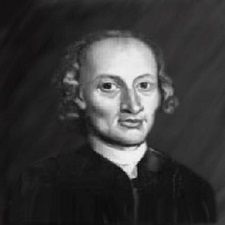 Johann Pachelbel was an important composer of the Middle Baroque period.
Born in Nuremberg, Germany, he was baptized at Saint Sebaldus Church on September 11, 1653.
He trained with various local organists and, unlike J.S. Bach, his music was quite well known during his short life of 52 years.
Johann Pachelbel was an important composer of the Middle Baroque period.
Born in Nuremberg, Germany, he was baptized at Saint Sebaldus Church on September 11, 1653.
He trained with various local organists and, unlike J.S. Bach, his music was quite well known during his short life of 52 years.
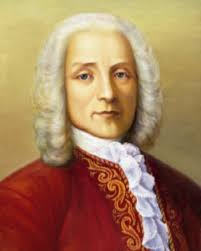 Karl Theodorus was born in Stuttgart, Germany, to Johann Pachelbel and his second wife, Judith Drommer, and baptized on Novemner 14, 1690.
Not much is known of his early life, although he may have spent a short time in England around 1732.
Karl Theodorus was born in Stuttgart, Germany, to Johann Pachelbel and his second wife, Judith Drommer, and baptized on Novemner 14, 1690.
Not much is known of his early life, although he may have spent a short time in England around 1732.
 Back to Composers Index
Submit Your Music / Contact Us / Company Description / Links